|
Books Should Be Free Loyal Books Free Public Domain Audiobooks & eBook Downloads |
|
|
|
Books Should Be Free Loyal Books Free Public Domain Audiobooks & eBook Downloads |
|
Literature |
|---|
|
Book type:
Sort by:
View by:
|
By: Henrik Ibsen (1828-1906) | |
|---|---|
 John Gabriel Borkman
John Gabriel Borkman is the penultimate play of the Norwegian playwright Henrik Ibsen, written in 1896. The Borkman family fortunes have been brought low by the imprisonment of John Gabriel who used his position as a bank manager to illegally speculate with his investors' money. The action of the play takes place eight years after Borkman's release when John Gabriel Borkman, Mrs. Borkman, and her twin sister Ella Rentheim battle over the future of young Erhart Borkman. Though John Gabriel Borkman... | |
 Love's Comedy
| |
|
Henrik Ibsen's Prose Dramas Vol III Lady Inger of Ostrat
| |
|
The Feast at Solhoug
| |
By: Baroness Orczy (1865-1947) | |
|---|---|
 The Old Man in the Corner
Created by Baroness Orczy, author of the famous Scarlet Pimpernel series, The Old Man in the Corner was one of the earliest armchair detectives, popping up with so many others in the wake of the huge popularity of the Sherlock Holmes stories. The Old Man relies mostly upon sensationalistic “penny dreadful” newspaper accounts, with the occasional courtroom visit for extra laughs. He narrates all this information (while tying complicated knots in a piece of string) to a Lady Journalist who frequents the same tea-shop. | |
By: Emma Orczy (1865-1947) | |
|---|---|
|
The League of the Scarlet Pimpernel
Written by Baroness Orczy and first published in 1919, The League of the Scarlet Pimpernel is a sequel book to the classic adventure tale, The Scarlet Pimpernel. The book consists of eleven short stories about Sir Percy Blakeney’s exploits in rescuing various aristos and French citizens from the clutches of the guillotine. The stories which are listed below, are set in 1793 but appear in no particular order. They occasionally refer to events in other books in the series. | |
By: Aldous Huxley (1894-1963) | |
|---|---|
 Crome Yellow
A shy, introverted young poet. A weekend in a magnificent English country house. A beautiful young lady whom the poet is secretly in love with. An assorted group of guests with varied interests, motives, ambitions and aspirations, and the complex web of history and events that connect all of them. Crome Yellow by Aldous Huxley was his first book, published in 1921, when he was just 27 years old. It is typical of many books written during this period by writers like Thomas Love Peacock and Somerset Maugham, centered round a country mansion and the quaint, British tradition of being invited to spend a weekend with a group of people whom one may or may not know... | |
|
Defeat of Youth and Other Poems
Though later known for his essays and novels, Aldous Huxley started his writing career as a poet. Published in 1918, The Defeat of Youth and Other Poems is his third compilation of poetry. The volume begins with "The Defeat of Youth", a sequence of twenty-two sonnets that explores irreconcilability of the ideal and the disappointing reality. Jerome Meckier called it “the century’s most successful sonnet sequence, better than Auden’s or Edna St. Vincent Millay’s.” In the rest of the volume, Huxley continues to explore themes started in The Burning Wheel, his first volume of poetry, including vision, blindness, and other contrasts... | |
By: Henry Van Dyke (1852-1933) | |
|---|---|
|
The Mansion
| |
|
The Lost Word A Christmas Legend of Long Ago
| |
By: Henry van Dyke (1852-1933) | |
|---|---|
|
Blue Flower
"Sometimes short stories are brought together like parcels in a basket. Sometimes they grow together like blossoms on a bush. Then, of course, they really belong to one another, because they have the same life in them. ...There is such a thought in this book. It is the idea of the search for inward happiness, which all men who are really alive are following, along what various paths, and with what different fortunes! Glimpses of this idea, traces of this search, I thought that I could see in certain tales that were in my mind,—tales of times old and new, of lands near and far away... | |
By: Publius Vergilius Maro (70 BC - 19 AD) | |
|---|---|
 The Aeneid
The Aeneid is a Latin epic written by Virgil in the 1st century BC that tells the legendary story of Aeneas, a Trojan who traveled to Italy, where he became the ancestor of the Romans. The first six of the poem’s twelve books tell the story of Aeneas’ wanderings from Troy to Italy, and the poem’s second half treats the Trojans’ ultimately victorious war upon the Latins, under whose name Aeneas and his Trojan followers are destined to be subsumed. The poem was commissioned from Vergil by the Emperor Augustus to glorify Rome... | |
By: Anton Chekhov (1860-1904) | |
|---|---|
 The Duel
The plot centres around Laevsky, who is living in a small seaside town in the Caucasus after running away with another man's wife, Nadyezhda Fyodorovna, amid dreams of starting a new life.The dreams have come to nothing as Laevsky idles away his life drinking and playing cards, and Nadyezhda begins to have other affairs.Laevsky's scheme to run away again, this time without his mistress, brings him into conflict with the rationalist Von Koren, who believes in Darwinian principles of natural selection and extinction of the weak and useless.Matters come to a head when an outburst from Laevsky leads to a duel. Von Koren is determined to teach Laevksy a lesson.(Introduction by Phil) | |
By: Mary Wollstonecraft (1759-1797) | |
|---|---|
 Maria: or, the Wrongs of Woman
Maria: or, The Wrongs of Woman is Mary Wollstonecraft's unfinished novelistic sequel to her revolutionary political treatise A Vindication of the Rights of Woman. It was published posthumously in 1798 by her husband, William Godwin. Maria revolves around the story of a woman imprisoned in an insane asylum by her husband, and focuses on the societal rather than the individual "wrongs of woman". Publicised at the same time as Wollstonecraft's memoirs, both were considered scandalous. Not until the 20th century was the novel considered an important historical and feminist work. | |
 Letters Written During a Short Residence in Sweden, Norway and Denmark
Published in 1796, Letters Written During a Short Residence in Sweden, Norway, and Denmark is a personal travel narrative by the eighteenth-century British feminist writer Mary Wollstonecraft. The twenty-five letters cover a wide range of topics, from sociological reflections on Scandinavia and its peoples to philosophical questions regarding identity. Published by Wollstonecraft's career-long publisher, Joseph Johnson, it was the last work issued during her lifetime. Wollstonecraft undertook her tour of Sweden, Norway, and Denmark in order to retrieve a stolen treasure ship for her lover, Gilbert Imlay... | |
|
Mary: A Fiction
Eliza, Mary's mother, is obsessed with novels, rarely considers anyone but herself, and favours Mary's brother. She neglects her daughter, who educates herself using only books and the natural world. Ignored by her family, Mary devotes much of her time to charity. When her brother suddenly dies, leaving Mary heir to the family's fortune, her mother finally takes an interest in her; she is taught "accomplishments", such as dancing, that will attract suitors. However, Mary's mother soon sickens and requests on her deathbed that Mary wed Charles, a wealthy man she has never met. Stunned and unable to refuse, Mary agrees. Immediately after the ceremony, Charles departs for the Continent. | |
|
Posthumous Works of the Author of A Vindication of the Rights of Woman
| |
By: Robert Smythe Hichens | |
|---|---|
 The Return of the Soul
Can the soul of the dead come back to haunt the one who was responsible for its death? What would happen if the responsible one did not believe it could be so, and yet was in love with the returned soul? The Return of the Soul is a horror story of a man who is visited by the returning soul of a deceased, and who has some very perplexing issues to deal with upon that return. (Introduction by Roger Melin) | |
|
Green Carnation
The Green Carnation, first published anonymously in 1894, was a scandalous novel by Robert Hichens whose lead characters are closely based on Oscar Wilde and Lord Alfred Douglas - also known as 'Bosie', whom the author personally knew. It was an instant succès de scandale on both sides of the Atlantic. The book features the characters of 'Esmé Amarinth' (Wilde), and 'Lord Reginald (Reggie) Hastings' (Douglas). The words put in the mouths of the hero and his young friend in the story are mostly gathered from the sayings of their originals... | |
|
The Garden of Allah
| |
|
In the Wilderness
| |
|
The Call of the Blood
| |
|
December Love
| |
|
Bella Donna A Novel
| |
|
Tongues of Conscience
Tongues of Conscience (1898) is a collection of five thought-provoking stories where an innocent, but selfish, action leads to horrific consequences. Robert Hichens writes some wonderfully evocative descriptions of nature: from a raw and exposed violent seascape, to the serene and idyllic countryside “…the violets seemed to sing in odours…” , to a train pushing through the white-out of a blizzard. In Sea Change an artist with a dark secret (“…I painted for him in words, the varying colors of waves in different seas… I drowned little Jack in the sea... | |
|
The Woman with the Fan
| |
|
"Fin Tireur" 1905
| |
|
The Way of Ambition
| |
|
The Desert Drum 1905
| |
|
A Spirit in Prison
| |
|
The Princess And The Jewel Doctor 1905
| |
|
Halima And The Scorpions 1905
| |
|
Desert Air 1905
| |
|
The Figure In The Mirage 1905
| |
|
The Mission Of Mr. Eustace Greyne 1905
| |
|
The Folly Of Eustace 1896
| |
|
The Spinster 1905
| |
|
Smaïn; and Safti's Summer Day 1905
| |
|
The Collaborators 1896
| |
By: Robert Benchley (1889-1945) | |
|---|---|
 Love Conquers All
Sixty-three essays on a variety of topics as wide apart as Family Life in America, Opera Synopses, Bigamy, International Finance and many more, Love Conquers All by Robert Benchley strangely enough does not touch upon romance at all! However, these delightful notes provide hours of browsing pleasure for young and old readers alike. Robert Benchley was a well-known humorist and newspaper columnist, radio and television presenter, actor, scriptwriter and broadcaster. He is also credited with creating the first ever television entertainment show and one of his iconic short films, How to Sleep won an Academy Award in 1936... | |
By: Sarah Orne Jewett (1849-1909) | |
|---|---|
 Country of the Pointed Firs
The Country of the Pointed Firs (1896) is considered Jewett’s finest work, described by Henry James as her “beautiful little quantum of achievement.” Despite James’s diminutives, the novel remains a classic. Because it is loosely structured, many critics view the book not as a novel, but a series of sketches; however, its structure is unified through both setting and theme. Jewett herself felt that her strengths as a writer lay not in plot development or dramatic tension, but in character development... | |
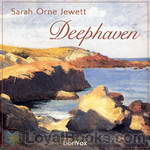 Deephaven
Sarah Orne Jewett is best known for her clean and clear descriptive powers that at once elevate common-place daily events to something remarkable, and lend dignity and grace to the most humble and homely human character. In Deephaven, go with her on vacation to an unforgettable seaside village where time runs slower and small pleasures are intensified. Much space is given to outdoor rambles and sights and events of daily living that draw you into another era. Jewett’s loving and gentle descriptions of the people and life of Deephaven will make you sorry when the book is over, and long to be able to find that village for yourself. | |
By: John Habberton | |
|---|---|
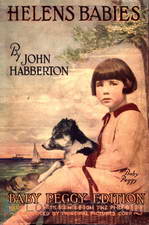 Helen's Babies
Harry Burton, salesman of white-goods, bachelor of twenty-eight leads a charmed existence. A letter from his sister, Helen changes his life forever. She and her husband have been invited for a holiday but they can't find anyone to baby-sit their two toddlers, five-year-old Budge and three-year-old Toddie. Ever the gallant helpful, Harry steps in, foreseeing nothing but a relaxed vacation with lots of books to read and thinks baby-sitting's a breeze. But destiny has other plans. Harry has long adored a lovely lady from afar and hopes to convince her that he is marriage material by displaying his nurturing side... | |
By: Benito Pérez Galdós (1843-1920) | |
|---|---|
|
Dona Perfecta
| |
|
Heath's Modern Language Series: Mariucha
| |
By: George Alfred Henty (1832-1902) | |
|---|---|
 Among Malay Pirates and Other Tales of Peril and Adventure
G. A . Henty was a prolific writer of historical fiction for young adults. In this collection of shorter stories we visit Malay pirates, have a couple of tales of India, a shipwreck off the Channel Islands and a bursting dam in California, and finish off escaping from captivity in China | |
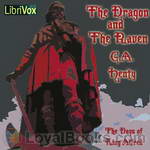 The Dragon and the Raven
During the reign of King Alfred, Danish forces have invaded the English countryside. Although the English try to repulse these attacks, they are overrun by the savagery and sheer numbers of the Danes.One of those deeply touched by these attacks is young Edmund. As a boy, he watched as his father was slain in battle fighting the Danes. Although young, he was intelligent, and noted the mistakes made on the battlefield. As he grew into a man, he put that knowledge into use and created a uniquely trained group of soldiers and built a new, stronger ship called the Dragon... | |
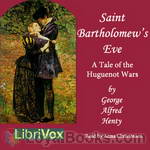 St. Bartholomew's Eve
Set in the days of the religious wars of Europe, St. Bartholomew’s Eve is the tale of the Huguenot’s desperate fight for freedom of worship in France. As the struggle intensifies the plot thickens, culminating in the dreadful Massacre of St. Bartholomew’s Eve. Henty, “The Boy’s Own Storyteller” weaves the life and adventures of Philip Fletcher and his cousin, Francois DeLaville, into the historical background with thrilling battles, sieges and escapes along the way (not to mention a fair damsel in distress!). | |