 |
Books Should Be Free Loyal Books Free Public Domain Audiobooks & eBook Downloads |
|
|
|
Books Should Be Free Loyal Books Free Public Domain Audiobooks & eBook Downloads |
|
Fiction |
|---|
|
Book type:
Sort by:
View by:
|
By: Lord Dunsany (1878-1957) | |
|---|---|
 Fifty-One Tales
Very brief, well-crafted stories, many having surprise endings, all steeped in the dye of myth and calling to every reader's neglected imagination. | |
By: Lord Dunsany (1878-1957) | |
|---|---|
 Don Rodriguez: Chronicles of Shadow Valley
| |
By: Lord George Gordon Byron (1788-1824) | |
|---|---|
 Don Juan, Cantos 13 -16
These are the last four Cantos of his mock epic that Byron completed in the year before his death at the age of 36 in Messolonghi, Greece, where he had gone to fight for the nationalists against the Ottoman Empire. Juan, now in England, is invited to spend the autumn with a hunting party at the ancient country seat of Lord Henry and Lady Adeline Amundeville. There, he meets the most intriguing of the Byronic heroines, Aurora Raby, and is visited by a ghost with ample breasts (!). That is the narrative outline but hardly the focus of the last Cantos... | |
By: Lord Redesdale (1837-1916) | |
|---|---|
 Tales of Old Japan
Tales of Old Japan by Lord Redesdale is a collection of short stories focusing on Japanese life of the Edo period (1603 - 1868). It contains a number of classic Japanese stories, fairy tales, and other folklore; as well as Japanese sermons and non-fiction pieces on special ceremonies in Japanese life, such as marriage and harakiri, as observed by Lord Redesdale. The best know story of these is "The Forty-seven Ronins" a true account of samurai revenge as it happened at the beginning of 18th century Japan... | |
By: Loretta Ellen Brady | |
|---|---|
|
Green Forest Fairy Book
This is a volume of original fairy tales by Loretta Ellen Brady. | |
By: Louis Ginzberg (1873-1953) | |
|---|---|
 Legends of the Jews
Rabbi Louis Ginzberg was one of the outstanding Talmudists of the twentieth century. He was born on November 28, 1873, in Kovno, Lithuania; he died on November 11, 1953, in New York City. Ginzberg taught at the Jewish Theological seminary from 1903 to 1953. For 50 years, he trained two generations of Conservative Rabbis.The Legends of the Jews is an epic 7-volume compilation of traditional Jewish stories loosely related to the Bible. Volumes 1-4 contain the stories, while volumes 5-7 contain Ginzberg’s notes and commentary... | |
By: Louis Hémon (1880-1913) | |
|---|---|
 Maria Chapdelaine
Maria Chapdelaine is one of the most famous French Canadian novels. It is the love story of Maria Chapdelaine, daughter of a peasant family in the Saguenay-Lac-St-Jean region of Quebec, in the 1900s. It is often seen as an allegory of the French Canadian people, describing simple joys and great tragedies, the bonds of family, the importance of faith, and the strength of body and spirit needed to endure the harshness of life in Canada’s northern wilderness. | |
By: Louis Joseph Vance (1879-1933) | |
|---|---|
 The Lone Wolf
The Lone Wolf is the first of eight books in a series featuring the jewel thief turned private detective Michael Lanyard. With his identity betrayed and the police on his heels, he must fly from Paris, which is made much more difficult by his self-imposed duty to take care of the beautiful Lucia, who has a dark secret of her own...A large number of movies have been based on the books. | |
 The Black Bag
Mr. Philip Kirkwood, a not so successful painter, receives a visitor from his home town in America, who wants him to do him an unspecified favor, but Kirkwood doesn't trust him and sends him away. That night, he sees the stranger dine with his beautiful daughter. In order to protect the girl, the stranger confesses to Kirkwood that he expects to be arrested upon leaving the restaurant. Kirkwood agrees to take care of the girl, but when he brings her home, he knows that she is in danger and that there must be a mystery attached. He decides to protect the girl... | |
 The False Faces
This is the second book in the Lone Wolf series. Michael Lanyard had turned his back on his career as gentleman-thief and started a respectable life, when World War I wrecks his life. With his family dead and the spy Ekstrom alive after all, his special skills as the Lone Wolf are needed once more, this time in the war behind enemy lines. But again, there is a mysterious woman involved... | |
By: Louis Napoleon Parker (1852-1944) | |
|---|---|
|
Pomander Walk
Pomander Walk is a unique street in London, and in this humorous novel we meet the unusual residents. It was originally produced as a stage play and includes lively dialog. | |
By: Louis Tracy (1863-1928) | |
|---|---|
 The Albert Gate Mystery
A new case for barrister and hobby detective Reginald Brett: The imperial diamonds were sent by the Sultan to London, to be cut in Albert Gate mansion by experts, all the while under the especial protection of the British government. One morning, however, the Turkish officials are found dead in the house, and the diamonds have vanished - despite the strict measures taken to protect them. The first suspicion falls on Jack Talbot, a young secretary at the Foreign Office, in whose charge this mission was, because he also disappeared without a trace on the same evening. Convinced that Talbot is innocent, his friend Lord Fairholme turns to Reginald Brett for help... | |
 A Mysterious Disappearance
Lady Dyke disappears mysteriously, and barrister and hobby detective Claude Bruce appears to be one of the last persons to have seen her. A short time later a dead body is found in the river, and Bruce follows the trails. Who is Sydney H. Corbett? Why did the Lady's maid disappear shortly after her Lady? And what business did Lady Dyke have at Sloane Square? If Bruce can find the answer to these questions, he will find the solution to the mystery. (Introduction by Carolin) | |
 The Silent Barrier
The Silent Barrier is a story of mystery and romance with Charles K. Spencer, a well-to-do young American mining engineer, as main character. Drinking his water in a hotel in London one day, he overhears a conversation between two young women, one of whom speaks of going to Switzerland. He decides to play "fairy godfather" and send the comparatively poor, but most amicable other girl there, without her knowing anything of him, under the pretext of furthering her career as a writer for a scientific journal. However, the girl is shadowed on her journey by the mysterious Mr. Mark Bower. Convinced from the first that Bower is a rogue, Mr. Spencer decides to follow them to protect the girl... | |
|
"Mind The Paint" Girl
"The "Mind The Paint" Girl, by Louis Tracy, is a delightful novelization of Sir Arthur Pinero's sparkling comedy now having a successful New York run.... Mr. Tracy has caught the very spirit of the drama and has told its story with much of the same vivre that has packed the theatre and made it impossible to get seats except several weeks in advance. It is the story of the meteoric rise of a lovely young musical comedy actress whose song "Mind the Paint" put London at her feet and the opportunity of placing several British coronets on her head." Note that we also have the play itself available here at. - Summary by Bookseller Magazine of 1912 | |
By: Louis Ulbach (1822-1889) | |
|---|---|
 The Steel Hammer
A large inheritance greatly transforms the lives of three people: a good man, who would have inherited at least a part of the fortune if his uncle hadn't passed away before he could alter the will, his cousin, who inherits all but is prevented from enjoying it, and a gambler, who is in desperate need of such a sum of money. The connection of the three ends fatal for at least one of them. | |
 For Fifteen Years
For Fifteen Years by Louis Ulbach is the sequel to The Steel Hammer which tells the story of a poor upholsterer, Jean Mortier who is falsely accused of murder and the tragic chain of events that follow. For Fifteen Years begins in the aftermath of the conviction when the destitute wife and daughter of Jean Mortier are taken in by the family of a character witness from the trial, Gaston de Monterey. Circumstances and deceptions lead to distrust and tension among the two families for fifteen years but the daughter of Jean Mortier and the son of Gaston de Monterey have fallen in love... | |
By: Louisa May Alcott (1832-1888) | |
|---|---|
 Little Women
Set in nineteenth century New England, Little Women follows the lives of the four March sisters-Jo, Beth, Amy and Meg. The novel is a classic rites of passage story, that has often split literature critics but has been adored by many over the years. Intended as a book for young girls, the book is too sentimental for some but plenty of adults and young men have Little Women firmly featured in their best books of all time. The pace of the novel can be slow at times and the language almost too perfect but the overall sympathetic tone of Alcott wins over the reader... | |
 Jack and Jill
Louisa May Alcott, more famously known for her Little Women series, takes a familiar nursery rhyme and creates a whole novel out of it in one of her last books Jack and Jill: A Village Story. Though she continued to publish under the penname AM Barnard, this book probably marked the end of a particular writing phase in 1880. Jack and Jill is set in the fictional Harmony Village. On a December afternoon, the youngsters of the village are out enjoying the bracing cold and snow. The bright winter shines down as they have fun skating and sledding... | |
 The Abbots Ghost or Maurice Treherne Temptation
Louisa May Alcott enthusiasts would be delighted to read this short novel published in 1867, just a year before the grand debut of her most famous Little Women trilogy. This is one of three books she wrote under the pseudonym AM Barnard. She used this name to pen tales that were meant more for adult readers, though younger people will find them quite interesting too. The Abbot's Ghost or Maurice Treherne's Temptation is a romance, mystery, ghost-story and novel of manners all rolled into one... | |
 Eight Cousins
This is the story of Rose Campbell, a rich but lonely and sickly girl who has been recently orphaned and sent to live with her maiden aunts. When Rose’s guardian, Uncle Alec, returns from abroad he takes over her care. Through his unorthodox theories about child-rearing and her exposure to the exploits of her seven male cousins and numerous aunts, Rose becomes happier and healthier. At the end of a year, she is given a choice of which relative she is to stay with. Whom will she choose? This is an unabridged recording of Louisa May Alcott’s classic work, originally published in 1874. | |
 An Old-Fashioned Girl
Polly Milton, a 14-year-old country girl, visits her friend Fanny Shaw and her wealthy family in the city for the first time. Poor Polly is overwhelmed by the splendor at the Shaws’ and their urbanized, fashionable lifestyles, fancy clothes and some other habits she considers weird and, mostly, unlikable. However, Polly’s warmth, support and kindness eventually win her the hearts of all the family members. Six years later, Polly comes back to the city to become a music teacher. | |
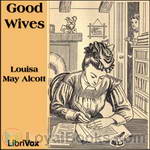 Good Wives
Louisa May Alcott’s overwhelming success dated from the appearance of the first part of Little Women: or Meg, Jo, Beth and Amy, (1868) a semi-autobiographical account of her childhood years with her sisters in Concord, Massachusetts. Part two, or Part Second, also known as Good Wives, (1869) followed the March sisters into adulthood and their respective marriages. | |
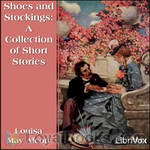 Shoes and Stockings: A Collection of Short Stories
Here are tales of love and war, modesty and frivolity, laughter and tears. Louisa May Alcott wrote many, many short stories. This collection shares but 7 of them. | |
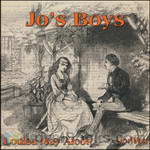 Jo's Boys
Jo’s Boys is the third book in the Little Women trilogy by Louisa May Alcott, published in 1886. In it, Jo’s “children”, now grown, are caught up in real world troubles. All three books – although fiction – are highly autobiographical and describe characters that were really in Alcott’s life. This book contains romance as the childhood playmates become flirtatious young men and women. The characters are growing up, going out into the world and deciding their futures. | |
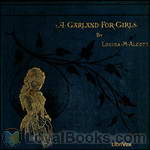 A Garland For Girls
“These stories were written for my own amusement during a period of enforced seclusion. The flowers which were my solace and pleasure suggested titles for the tales and gave an interest to the work. If my girls find a little beauty or sunshine in these common blossoms, their old friend will not have made her Garland in vain.” – L.M. Alcott, September, 1887 | |
 Rose in Bloom
Opening several years after the close of "Eight Cousins", we find Rose coming home fresh from a voyage overseas, to find much changed about her. Now of a marriageable age and heiress to a fortune, Rose finds joy,sorrow, and finally love await her -- as the Rose is finally ready to bloom into a good, strong, sweet and true woman.This sequel to Eight Cousins was written by Louisa May Alcott, the author of many well beloved children's books including Little Women, An Old Fashioned Girl, Under the Lilacs and more. | |
 Under the Lilacs
"When two young girls decide to have a tea party with their dolls and a mysterious dog comes and eats their prized cake, they end up finding a circus run-away, Ben Brown. Ben is a horse master, and loves horses, so when the Moss' take the young boy in, they decide to give him work at the neighbors house driving cows (on a horse, of course). After that a series of events happens, and Ben finds out his beloved father is dead. Miss Celia, a neighbor, feels sorry and comforts him, and finally offers to let Ben stay with her and her fourteen-year-old brother, Thornton who is called Thorny... | |
 Aunt Jo's Scrapbag
A collection of short stories by Louisa May Alcott that were written with the intent to entertain the whole family and to fill children's heads with wonder and delight. | |
 Work: A Story of Experience
It is one of “several nineteenth-century novels [which] uncovers the changes in women’s work in the new industrial era, as well as the dilemmas, tensions, and the meaning of that work” The story depicts the struggles of a young woman trying to support herself. The main character, Christie Devon, works outside the home in a variety of different jobs, but the end of her story marks “the beginning of a new career as a voice and activist for other working women”. | |
 Flower Fables
Flower Fables is Louisa May Alcott’s first book, penned at 16 for Ralph Waldo Emerson’s daughter, Ellen. | |
 The Mysterious Key and What It Opened
In this delightful short story, we discover the secrets of the Trevlyn family. 'The Mysterious Key and What it Opened' is a mystery entwined with romance (Introduction by ashleighjane) | |
 Behind a Mask, or a Woman's Power
Fans of Louisa May Alcott's Little Women will remember that her heroine Jo wrote racy novels before turning her hand to more "serious" literature. Alcott, writing under the pseudonym A. M. Barnard, often did the same, and Behind a Mask (1866) is one of her sensation novels. It focuses on Jean Muir, who enters the home of the wealthy Coventry family as governess to their sixteen-year-old daughter. But is the beguiling Miss Muir all that she seems to be? (Introduction by Elizabeth Klett) | |
|
Shawl-Straps: A Second Series of Aunt Jo's Scrap-Bag
| |
|
Spinning-Wheel Stories
A group of stories-within-a-story, told in the classic Louisa May Alcott style. "I've a little cold," said the old lady, "and am too hoarse for talking, my dears; but Aunt Elinor has looked up a parcel of old tales that I've told her at different times and which she has written down. You will like to hear her reading better than my dull way of telling them, and I can help Minnie and Lotty with their work, for I see they are bent on learning to spin." The young folk were well pleased with grandma's proposal; for Aunt Nell was a favorite with all, being lively and kind and fond of children, and the only maiden aunt in the family... | |
|
My Doves
Librivox volunteers bring you eleven readings of My Doves, by Louisa May Alcott. This was the fortnightly poem for December 21, 2014 - January 4, 2015 | |
By: Lucia Chamberlain (1882-1978?) | |
|---|---|
 The Other Side of the Door
It's 1865 in the city of San Francisco. Pretty, young Ellie Fenwick is walking to the market early one morning to surprise her father with some fresh mushrooms. As she passes a gambling house, she hears a gunshot and two young men emerge. One man falls dead on the pavement and the other is Johnny Montgomery, a handsome young man Ellie recognizes from seeing him previously at a dance. Johnny is holding a smoking pistol in his hand. This incident propels the proper young Ellie into a world of prisons and courtrooms as a murder trial unfolds and the fate of Johnny may rest with her testimony... | |
By: Lucian of Samosata (120—180) | |
|---|---|
 Trips to the Moon
The endeavour of small Greek historians to add interest to their work by magnifying the exploits of their countrymen, and piling wonder upon wonder, Lucian first condemned in his Instructions for Writing History, and then caricatured in his True History, wherein is contained the account of a trip to the moon, a piece which must have been enjoyed by Rabelais, which suggested to Cyrano de Bergerac his Voyages to the Moon and to the Sun, and insensibly contributed, perhaps, directly or through Bergerac, to the conception of Gulliver’s Travels. The Icaro-Menippus Dialogue describes another trip to the moon, though its satire is more especially directed against the philosophers. | |
By: Lucius Apuleius | |
|---|---|
 Metamorphosis or The Golden Ass
The Metamorphosis, also known as The Golden Ass, is one of the very few novels of the Ancient World that survived to our days; one of the two novels of Roman Literature that we can still read; and the only one preserved in its entirety (the other one being the extremely fragmentary Satyricon). The story of the Metamorphosis, the tale of a man turned into a donkey that goes through many adventures to become a man again, inspired many other similar ones later on. However, more than just the plot, the style of the Golden Ass also made it famous... | |
By: Lucretia P. Hale (1820-1900) | |
|---|---|
 The Peterkin Papers
The Peterkin Papers is a book-length collection of humorous stories by Lucretia Peabody Hale, and is her best-known work. The Peterkins are a lovable but comically inept family with ingenuity, logic, resourcefulness, and energy—but not common sense. Many chapters show the family trying to solve some problem in a roundabout way, failing, and eventually being rescued by “the wise old lady from Philadelphia,” who cuts the Gordian knot with an effective but prosaic solution. The charm of the story is not in the plot, but in the telling, building up layers of complication, and the affectionate fun poked at the not-quite-cartoonish characters... | |
By: Lucy Aikin (1781-1864) | |
|---|---|
 Swiss Family Robinson in Words of One Syllable
All the excitement, danger, heartbreaks and triumphs of this well known story, but without the big words. Lucy Aikin, an accomplished writer and writing as Mary Godolphin, accomplishes this with apparent ease in this little book. The story of a plucky family ship wrecked on a desolate island, saving what they can from the ship, is well known. The entire family, under the leadership of an intrepid father and mother works together to not only survive in this island, but actually prosper. This work would seem an excellent one for English as a second language speakers to improve their skill in English. | |
By: Lucy Clifford (1846-1929) | |
|---|---|
 Anyhow Stories: Moral and Otherwise
A collection of stories and poems for children by British novelist, journalist, and playwright Lucy Lane Clifford, better known during her lifetime as Mrs W.K. Clifford. She was famous with her mathematician husband for Sunday salons which attracted both scientists and literati. She was born in 1846 and died in 1929. Summary by Val Grimm | |
By: Lucy Fitch Perkins | |
|---|---|
 The Belgian Twins
This story is based upon the experiences of two Belgian refugees in World War I. When their parents are marched of by Germans, Jan and Marie are left alone. Now they, along with their dog, have to find their parents! | |
 The Dutch Twins
The Dutch Twins are Kit and Kat, 5 years old and not yet big enough to be called by their real names, Christopher and Katrina. They live in a typical Dutch household, around the turn of the last century. The book follows their day-to-day adventures and accidental mishaps. The book is the first of a series of stories about twins in different countries, meant to give children an idea of life and customs in various parts of the world. | |
By: Lucy Maud Montgomery (1874-1942) | |
|---|---|
 Chronicles of Avonlea
A collection of short stories first published in 1912, the book focuses on events occurring in the popular fictional village of Avonlea, which is notorious as the hometown of Anne Shirley. Comprised of 12 short stories, the Chronicles of Avonlea present a different view of the town, with the introduction of many new gripping characters, which prove to be just as endearing as their most renowned resident. Tales of everyday snippets of life proving to be humorous, identifiable, and heartwarming, the collection is an effective reinvigoration to the classic setting... | |
 Rilla of Ingleside
Rilla of Ingleside is the eighth book in the Anne of Green Gables series and focuses on the inspiring journey of Rilla Blythe, the youngest daughter of Anne and Gilbert, as she transforms from a carefree young girl into an enduring young woman swept into the chaos of war. Written from a female perspective, Montgomery accurately depicts a time in history, as she provides a contemporaneous account of the war and serves up the most emotional book in the series. Set during the First World War, the novel explores themes of coming of age, love, separation, and most importantly women’s roles during the war... | |
 The Story Girl
Revealed to be a personal favorite by Montgomery herself, The Story Girl follows the lives of a group of young children as they experience a summer of charming and realistically clumsy adventures. Published in 1911, the novel explores themes of childhood innocence and its transience, while highlighting the value of intangible things which prove to be the very essence of life. The novel begins when the young narrator Beverly King and his brother Felix are sent to stay with their Aunt Janet and Uncle Alec at their country estate over the summer, while their widowed father is away on business abroad... | |
 The Golden Road
In the sequal to The Story Girl Sara Stanley returns to join the King children in publishing their own local magazine to entertain the town of Carlisle. | |
 Rainbow Valley
If you've read and loved Anne of Green Gables, you'd definitely like to add Rainbow Valley by Lucy Maud Montgomery to your collection. Published in 1919, it is the seventh book in the series and follows the further life and adventures of Anne Shirley. At Ingleside, Anne is now happily married to her childhood friend the devoted Gilbert Blythe and have now been together blissfully for fifteen years. They have six children. The book opens with the return of Anne and Gilbert (who is now a brilliant doctor) from a sojourn in London, where they had gone to attend a big medical congress... | |
 Lucy Maud Montgomery Short Stories, 1896 to 1901
Stories from 1896 to 1901. Lucy Maud Montgomery was born at Clifton (now New London), Prince Edward Island, Canada, on November 30, 1874. She achieved international fame in her lifetime, putting Prince Edward Island and Canada on the world literary map. Best known for her "Anne of Green Gables" books, she was also a prolific writer of short stories and poetry. She published some 500 short stories and poems and twenty novels before her death in 1942. | |
 Further Chronicles of Avonlea
Further Chronicles of Avonlea is a collection of short stories by L.M. Montgomery and is a sequel to Chronicles of Avonlea. Published in 1920, it includes a number of stories relating to the inhabitants of the fictional Canadian village of Avonlea and its region, located on Prince Edward Island. The book was published without the permission of L.M. Montgomery, and was formed from stories she had decided not to publish in the earlier Chronicles of Avonlea. Montgomery sued her publishers, L.C. Page & Co, and won $18,000 in damages after a legal battle lasting nearly nine years. | |
 Kilmeny of the Orchard
Eric Marshall is all that a well brought-up young man should be. Handsome, steadfast, and full of ambition, he is expected to expand the Marshall & Company empire — and to marry a woman suitable to replace his mother in Nova Scotia’s finest circles. When a sick friend asks for a favour, becoming a substitute schoolmaster in the Prince Edward Island countryside seems the perfect post-graduation lark. But when Eric wanders into an old orchard at twilight, his life will be changed forever… | |
|
Watchman and Other Poems
While L. M. Montgomery is better known for her novels, such as Anne of Green Gables and Emily of New Moon, she also wrote hundreds of poems. Her love of beauty, nature, and the sea is evident in this, the only volume of her poetry published during her lifetime. | |
By: Lucy S. Furman (1869-1958) | |
|---|---|
|
Mothering on Perilous
Cecelia Loring is alone in the world after the death of her mother and has come to the Kentucky mountains in search of work. Although very depressed from her loss she soon becomes caretaker of the garden at a school and not many days later finds herself quite busy as housemother to a group of energetic boys that keep running away from the school because of homesickness, especially Nucky, who seems to have the weight of the world on his shoulders, worrying about not being at home to help his brother Blant "keep lookout" for the Cheevers, who have been at war with the Marrses for years over a piece of land... | |
By: Luigi Capuana | |
|---|---|
 A Vampire
A suspenseful vampire tale. Translated from the original Italian text by Erin O'Rourke. | |
By: Luis Vaz de Camões (1524-1580) | |
|---|---|
 The Lusiads
The Lusiads (Os Lusíadas) is a Portuguese epic poem, written in the 16th century by Luis Vaz de Camões. The poem tells the tale of the Portuguese discoveries in the 15th and 16th centuries, specially the voyage to India by Vasco da Gama. Modelled after the classic epic tradition, Camões' Lusiads are considered not only the first literary text in Modern Portuguese, but also a national epic of the same level as Vergil's Aeneid. In the 19th century, Sir Richard Francis Burton translated Camões' Lusiads, in what he considered "the most pleasing literary labour of his life". | |
By: Lydia Maria Child (1802-1880) | |
|---|---|
 The Freedmen's Book
Lydia Maria Child, an American abolitionist, compiled this collection of short stories and poems by former slaves and noted activists as an inspiration to freed slaves. In her dedication to the freedmen, she urges those who can read to read these stories aloud to others to share the strength, courage and accomplishments of colored men and women. In that spirit, this recording aims to gives that voice a permanent record. As in the original text, the names of the colored authors are marked with an "x". | |
By: Lyman Abbott (1835-1922) | |
|---|---|
|
Parables
This is a collection of the parables of the new testament. - Summary by Lynda Marie Neilson | |
By: M. E. Francis (1859-1930) | |
|---|---|
|
In a North Country Village
M. E. Francis was born Mary E. Sweetman in Dublin and moved to Lancashire on her marriage to Francis Nicholas Blundell, of the Blundell family, who remain squires of Little Crosby, the last Catholic recusant village in England, which lies a few miles north of Liverpool. Blundell died young and Mary went on to write more than 50 books, using her husband's Christian name as pen name, including this collection of 12 stories set in Little Crosby (‘Thornleigh’). A romantic portrait of mid-19th century... | |
By: M.L. Nesbitt | |
|---|---|
|
Grammar-Land
In this charming 1877 book of grammar instruction for children, we are introduced to the nine parts of speech and learn about the rules that govern them in Grammar-Land."Judge Grammar is far mightier than any Fairy Queen, for he rules over real kings and queens down here in Matter-of-fact-land. Our kings and queens have all to obey Judge Grammar’s laws, or else they would talk what is called bad grammar; and then, even their own subjects would laugh at them, and would say: “Poor things!They are funny fellows, these nine Parts-of-Speech... | |
By: Mack Reynolds (1917-1983) | |
|---|---|
 Mercenary
Every status-quo-caste society in history has left open two roads to rise above your caste: The Priest and The Warrior. But in a society of TV and tranquilizers--the Warrior acquires a strange new meaning... (Introduction from the Gutenberg text) | |
 Ultima Thule
Ronny Bronston has dreamed all his life of getting a United Planets job that would take him off-world. He finally gets the opportunity when he is given a provisional assignment with Bureau of Investigation, Section G. But will he be able to complete his assignment and find the elusive Tommy Paine? | |
By: Marcel Allain (1885-1969) | |
|---|---|
 Fantômas
Fantômas is the first of 32 novels penned from 1911 to 1913 by Marcel Allain and Pierre Souvestre. The title character is a ruthless thief and killer, a bloodthirsty successor to LeBlanc's Arsène Lupin. The first five novels were made into silent film serials. The character and the movies caught the eye of the French Surrealists who admired the primal violence of Fantômas, as well as his portrayal in the films, which are considered landmarks in French Cinema. In Fantômas, the Marquise de Langrune is savagely murdered and Inspector Juve, who is obsessed with capturing Fantômas, arrives to solve the murder. | |
 Messengers of Evil
Fantômas was introduced a few years after Arsène Lupin, another well-known thief. But whereas Lupin draws the line at murder, Fantômas has no such qualms and is shown as a sociopath who enjoys killing in a sadistic fashion. He is totally ruthless, gives no mercy, and is loyal to none, not even his own children. He is a master of disguise, always appearing under an assumed identity, often that of a person whom he has murdered. Fantômas makes use of bizarre and improbable techniques in his crimes, such as plague-infested rats, giant snakes, and rooms that fill with sand... | |
 The Exploits of Juve
Fantômas was introduced a few years after Arsène Lupin, another well-known thief. But whereas Lupin draws the line at murder, Fantômas has no such qualms and is shown as a sociopath who enjoys killing in a sadistic fashion.He is totally ruthless, gives no mercy, and is loyal to none, not even his own children. He is a master of disguise, always appearing under an assumed identity, often that of a person whom he has murdered. Fantômas makes use of bizarre and improbable techniques in his crimes, such as plague-infested rats, giant snakes, and rooms that fill with sand... | |
By: Marcus Clarke | |
|---|---|
 For the Term of His Natural Life
For the Term of his Natural Life, written by Marcus Clarke, was published in the Australian Journal between 1870 and 1872 (as His Natural Life), appearing as a novel in 1874. It is the best known novelisation of life as a convict in early Australian history. Described as a “ripping yarn”, and at times relying on seemingly implausible coincidences, the story follows the fortunes of Rufus Dawes, a young man transported for a murder which he did not commit. The harsh and inhumane treatment meted out to the convicts, some of whom were transported for relatively minor crimes, is clearly conveyed... | |
By: Marcus Tullius Cicero | |
|---|---|
 The Philippics
A philippic is a fiery, damning speech delivered to condemn a particular political actor. The term originates with Demosthenes, who delivered an attack on Philip II of Macedon in the 4th century BCE.Cicero consciously modeled his own attacks on Mark Antony, in 44 BC and 43 BC, on Demosthenes’s speeches, and if the correspondence between M. Brutus and Cicero are genuine [ad Brut. ii 3.4, ii 4.2], at least the fifth and seventh speeches were referred to as the Philippics in Cicero’s time. They were also called the Antonian Orations by Aulus Gellius... | |
By: Margaret Ann Hubbard | |
|---|---|
 Sister Simon's Murder Case
Set in the picturesque wilds of a Midwestern resort town at the height of the tourist season, Sister Simon’s Murder case begins with the murder of a terrified elderly lady, Dannie Grear. But what was she so afraid of? And who is the killer who keeps attacking anyone he thinks may know too much?The opinionated local police ran into one obstacle after another in their attempts to find the elusive killer. But the menace was effectively removed by the independent investigation of Sister Simon, a very proper nun who had learned from her policeman father never to take anything for granted in a murder case and how to fire a gun with deadly accuracy. | |
 Murder Takes the Veil
Set in the Louisiana bayou country, here is a drama rich with suspense...the story of lovely Trillium Pierce powerless at the mercy of a murderer who believes that he has no power over himself - that his determination to kill is written in the stars. The frightened girl is helpless, as her friends at Aurelian College are victimized by the menace who stalks the swampland in a nun's habit.Margaret Ann Hubbard was a writer of various genres: historical novels, Catholic children's books, and several crime mysteries written during the 1950's and 1960's. | |
|
Murder at St. Dennis
A cunning killer prowls the winding corridors of an old hospital in this thriller by the author of "Murder Takes the Veil". (From original jacket) | |
By: Margaret Burnham | |
|---|---|
 The Girl Aviators and the Phantom Airship
Teenagers Peggy Prescott and her brother Roy share a love of aviation that they inherited from their late father. Mr. Prescott had always dreamed of building an aeroplane that would be free of the defects of planes already invented. Peggy and Roy manage to build a plane starting with the framework their father had begun. Peggy christens it ‘The Golden Buttefly’ and she and Roy are determined to enter it in a young aviator’s contest for a prize of $5000. The Prescotts need the money desperately to save the home they share with their aunt which is about to be taken from them by the rather nasty banker, Mr... | |
By: Margaret Cavendish, Duchess of Newcastle (1623-1673) | |
|---|---|
|
Blazing World
The Blazing World by Margaret Cavendish is, all at once, a satire, a treatise on natural philosophy, a work of proto-science fiction, and a defiant venture into a scientific world where women were not usually allowed. It tells the tale of a young Lady who is kidnapped by a man that tries to sail away with her. Through divine interference, however, the ship is tossed into a storm and everyone but the Lady perishes. Blown up to the North Pole, she inadvertently passes into to another world, the Blazing World, where she is almost immediately made supreme ruler... | |
By: Margaret Fuller (1810-1850) | |
|---|---|
 Woman in the Nineteenth Century and Kindred Papers Relating to the Sphere, Condition, and Duties of Women
Margaret Fuller (1810-1850) was an American feminist, writer, and intellectual associated with the Transcendentalist movement. Her book Woman in the Nineteenth Century (1845) is considered the first major feminist work in the United States. Her life was short but full. She became the first editor of the transcendentalist journal The Dial in 1840, before joining the staff of the New York Tribune under Horace Greeley in 1844. By the time she was in her 30s, Fuller had earned a reputation as the best-read person in New England, male or female, and became the first woman allowed to use the library at Harvard College... | |
By: Margaret Gatty (1809-1873) | |
|---|---|
|
Parables from Nature
Parables From Nature is a collection of short stories which were originally published as 4 separate volumes. They are inspired from Nature and written for children. Nevertheless, Gatty uses children's literature because she knows that in doing so, she can reach a wider group of readers and point out problems from the Victorian Age. | |
|
Aunt Judy's Tales
This is a collection of six short stories by Margaret Gatty, writing as Mrs. Alfred Gatty. All told by 'an elder girl' in a large family to the 8 little ones gathered around. "There is not a more charming sight in the domestic world, than that of an elder girl in a large family, amusing what are called the little ones. "How could mamma have ventured upon that cosy nap in the arm-chair by the fire, if she had been harassed by wondering what the children were about? Whereas, as it was, she had overheard No... | |
By: Margaret Penrose (1873-1954) | |
|---|---|
 Dorothy Dale – A Girl of Today
Dorothy Dale is the daughter of an old Civil War veteran who is running a weekly newspaper in a small Eastern town. Her sunny disposition, her fun-loving ways and her trials and triumphs make clean, interesting and fascinating reading. The Dorothy Dale Series is one of the most popular series of books for girls ever published. | |
 Dorothy Dale's Camping Days
So the parties separated and then Dorothy was free to leave her hiding place. She longed to tell her friends the strange story, but she knew that the finding of Tavia was the one and only thing to be thought of just then. “Are you sure that this is the direction in which the boys went?” asked Nat, with something like a sigh. Dorothy looked over the rough woodland. “No,” she said, “there was a swamp, for I distinctly remember that they picked their way through tall grass, and about here the grass is actually dried up.” (Extract from Chapter 26) | |
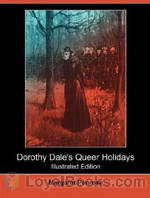 Dorothy Dale's Queer Holidays
Relates the details of a mystery that surrounded Tanglewood Park. There is a great snowstorm, and the young folks become snowbound, much to their dismay. | |
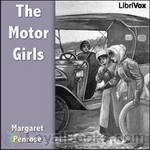 The Motor Girls
When Cora Kimball got her new auto for her birthday she had no idea what adventures would start for her and brother Jack.Where did Ed’s money and bonds disappear? Were they misplaced or were they stolen and lost forever.Did the conceited Sid Wilcox have something to do with the missing money, with the help of Ida Giles? And what did the obnoxious Lem Gildy have to do with it all?Join Cora and her friends in this mystery and adventure of The Motor Girls. | |
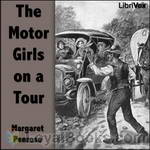 The Motor Girls on a Tour
This is the second book in the series of the Motor Girls. Join Cora and her friends in this mystery and adventure of The Motor Girls. Also the search for a missing table and promise book belonging to a cripple girl called Wren. Why is Clip so mysterious? What is she up to? Is Sid Wilcox up to his old tricks with his chum Rob Roland? | |
|
Dorothy Dale's Great Secret
This is the third book in the Dorothy Dale series, written under the house pseudonym of Margaret Penrose. "Girls have to have secrets, or they wouldn't be girls, and we have now got ours." In this, the third book in the Dorothy Dale series, written under the house pseudonym of Margaret Penrose, Dorothy proves herself to be a good friend to Tavia. Amid suspicion and worry for her chum, she undertakes the perilous task of 'rescuing' her and saving her reputation with minimal help from her cousins Nat and Ned White and without spreading her concerns, in the hope they be unfounded. | |
By: Margaret S. Comrie (1851-?) | |
|---|---|
|
Key to the Riddle
Young Azerole Montoux and her brother Leon find themselves separated from their family by the religious persecutions of 1686. Threatened by the authorities and forced to depend on strangers, they must decide whether they can trust God to make sense out of the riddle of their lives. | |
By: Margaret Sidney (1844-1924) | |
|---|---|
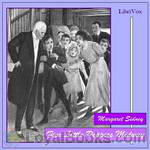 Five Little Peppers Midway
Five Little Peppers Midway is the joyous continuation of the Pepper family's story. A snooty cousin comes to stay with the Peppers, and yet even this can't dampen the joy the Pepper children feel about the wonderful prospect of Mamsie's upcoming wedding! | |
 Five Little Peppers Grown Up
Five Little Peppers Grown Up continues the story of Ben, Polly, Joel, David, and Phronsie Pepper. Together with the Kings, the Whitneys, and other friends old and new, the Peppers learn and teach about life and love as they grow into adulthood. | |
 Five Little Peppers Abroad
This book is the next in the series of the Five Little Peppers, by Margaret Sidney, after Five Little Peppers and How They Grew and Five Little Peppers Midway. It continues the series where Ben, Polly, Joel, Davie, and Phronsie get to travel abroad in Europe! | |
|
Five Little Peppers at School
The Five Little Peppers are off to school - Joel and Davie at a boys' boarding school, Polly, Phronsie and Ben at home. At first the storyline shifts between the boys and the girls, until the boys come home for the holidays and all the children are caught up in plans to help the poor family of a brakeman who was killed in an accident. Meanwhile Polly struggles to keep Jasper's friend from being expelled, Phronsie has a frightening accident and Ben works hard to repay Mr. King. It's another heart-warming tale from the author of Five Little Peppers and How They Grew! | |
By: Margaret Warde (1875-) | |
|---|---|
 Betty Wales, Freshman
First published in 1904, Betty Wales Freshman is the first book in an 8 volume series that follows Betty and her classmates throughout college and beyond. It takes place at Harding in New England (NOT to be confused with the Arkansas university) based on the author's time at Smith College in Massachusetts. Some humour and frivolity ensue as well as interpersonal drama among Betty and her many peers. And of course, the usual fascination with basketball that tends to run the gamut in the bountiful supply of books about most boarding school girls. (The popularity of this series inspired product placement by a dressmakers company.) | |
By: Margaret Widdemer (1884-1978) | |
|---|---|
|
Rose Garden Husband
This novel was written by Margaret Widdemer, who won the Pulitzer prize for her collection of poetry in 1919. Phyllis is a 25-years-old children's librarian. She is good at her job. Yet when she sees a girl from her hometown with two children, she discovers she wants more. She marries an invalid who is expected to die. Would she find the love and sense of belonging she craves for? And would he really die? Note: This book is in the public domain in the USA. The author died in 1978 so may still be protected by copyright in many other countries. | |
By: Margery Williams (1881-1944) | |
|---|---|
 The Velveteen Rabbit
“What is REAL?” asked the Rabbit one day… Written in 1922, The Velveteen Rabbit, or, How Toys Become Real is the tale of a sweet unassuming toy rabbit who questions what it is to live and to love. It was the first children’s title written by Margery Williams (1881 – 1944), who had previously created only for adults. This story eclipsed all others, to become her most famous work, and an ever adored classic for all ages. | |
By: Maria Edgeworth | |
|---|---|
 Belinda
When Belinda was published in 1801, it became both controversial and popular. Controversial because of the inter-racial marriage presented in the novel, and popular because it's a very good comedy of manners, like Evelina by Fanny Burney. Belinda, like Evelina, is a soft and loving girl of 17, is coming to London with her aunt who directs her action in order to make sure that she'll find a good match. But what will happen if Belinda will fall in love? Will Clarence Hervey, the man she loves, be able to marry her? It seems almost impossible, as he is secretly bringing up another woman to be a perfect wife to him and now, in all honor, he thinks he must marry her... | |
|
Castle Rackrent
| |
By: Maria Gowen Brooks (1794-1845) | |
|---|---|
|
Idomen, or The Vale of Yumuri
Idomen (1843) is the creative-nonfiction memoir of the beautiful and brilliant American poetess Maria Gowen Brooks, who was compared in the 19th century to Byron and Swinburne. In it she tells the story of an ill-fated love affair she had twenty years earlier while traveling with her young son in Canada following the death of her much older husband. The traumatic breakup led to suicide attempts on her part, which romantic masochist Brooks byronically relates in full, albeit changing everybody's name... | |
By: Maria Susanna Cummins (1827-1866) | |
|---|---|
 The Lamplighter
Gertrude began life as an abused child in the care of Nan Grant, a cold and cruel woman. The only human character who was kind to her was the lamplighter, Truman Flint. When Nan, in one of her tantrums, threw Gertrude away from her house, he took her into his care. A few unforgettable people taught Gertrude everything that a young lady has to know. Almost everybody loves and admires Gertrude. But the one she loved best is Willie Sullivan. Will this love stay strong even after 6 years of separation? And will Gertrude, so admired and loved as she is, be happy - once in her life - for herself and not for others? | |
By: Maria Thompson Daviess (1872-1924) | |
|---|---|
 The Melting of Molly
Meet Molly: a quirky, spirited twenty-five-year old, widowed for 6 years, living in picturesque Hillsboro with her aunt amidst gossipy neighbors, on a strict diet, and in serious boy trouble. There’s Arthur, her childhood sweetheart; then, there’s the enigmatic, charming Judge Wade; and of course, there’s her cousin Tom; and then, her infuriating neighbor, John Moore… But who will melt her heart? It is Arthur’s return, and his seemingly simple request of wanting to see her in the same blue dress she wore when he left, that throws everything into turmoil… Sometimes, one can only find some solace in one’s garden... | |
By: Marie Belloc Lowndes (1868-1947) | |
|---|---|
 The Lodger
The Lodger by Marie Belloc Lowndes was inspired by the Jack the Ripper murders. An older couple, the Buntings, are forced to take in lodgers to make ends meet. They are on the verge of starvation when a mysterious man, Mr. Sleuth, appears at their door and asks for lodging, paying in advance. However, when the murders of young women in London attributed to a man known only as “The Avenger” continue, the Buntings, particularly Mrs. Bunting, grow fearful that their lodger may be the murderer. | |
By: Marie Corelli (1855-1924) | |
|---|---|
 Ziska
Ziska
The story revolves around the mysterious Princess Ziska, who captivates a set of European tourists who are spending time in exotic Egypt. The story is a mystery involving reincarnation, romance & a touch of mild horror. (introduction by ilianthe) | |
 A Romance of Two Worlds
A Romance of Two Worlds starts with a young heroine telling her story of a debilitating illness that includes depression and thoughts of suicide. Her doctor is unable to help her and sends her off on a holiday where she meets a mystical character by the name of Raffello Cellini, a famous Italian artist. Cellini offers her a strange potion which immediately puts her into a tranquil slumber, in which she experiences divine visions. | |
By: Marie de France | |
|---|---|
 French Mediaeval Romances from the Lays of Marie de France
The tales included in this little book of translations are derived mainly from the "Lays" of Marie de France. I do not profess them to be a complete collection of her stories in verse. The ascription varies. Poems which were included in her work but yesterday are withdrawn to-day, and new matter suggested by scholars to take the place of the old. I believe it to be, however, a far fuller version of Marie's "Lays" than has yet appeared, to my knowledge, in English. Marie's poems are concerned chiefly with love... | |
By: Marietta Holley (1836-1926) | |
|---|---|
|
Poems
This is a collection of poems by Marietta Holley, better known as Josiah Allen's Wife. | |
By: Marion St. John Webb | |
|---|---|
 The House with the Twisting Passage
When Jenny goes to stay with her Aunt Abby, a caretaker in a grand old manor-house, she discovers a wonderful twisting passage on the second floor with an array of colourful characters living in the rooms along it – each of them with a story to tell. | |